Sunday, February 21, 2010

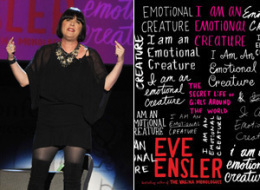
Excerpting <em>I Am an Emotional Creature: The Secret Life of Girls Around the World</em>


I whole heartily believe in this view...my only critique is that this poem in all it's beauty limits these feelings and emotions to women and girls...I believe it's greater than the confines of one's gender, rather, it is a human quality that many in today's world forget all too easily. This is not a gender related ideal, this is our humanity at play and I believe it is our call to reconnect to this sacred place that is often trumped by our cultural and social values that don't imagine the greater world in which we ought to live. I charge those of you who may read this not to EXCLUDE men from this ideal, this sacred space of which yes mostly women are privileged to know. This is not just an answer to our current needs as individuals, our yearning for a deeper part of ourselves and to be accepted for who WE are...but is a calling that we must stand strong in our attempts to demonstrate to the world that this is our innate being. That it’s not just about an individual’s right to have and be emotional, it is the answer to world peace, when there may be no logic behind love and care sometimes (how does the mother embrace the man that murdered her daughter? How does a nation split by apartheid develop the Truth and Reconciliation process?) We know within our hearts that it is the right thing to do.
Read the Article at HuffingtonPost

Wednesday, September 2, 2009

Matthew Dowd and the Clinton School


I attended the speaker Matthew Dowd today and had a good listen to all that he said.

Most notably was his discussion on confirmation bias, which is how individuals seek out confirmation of self through others. This happens in both big and small things, especially in campaigns and in places like the White House.

This was addressed to point out the deep divide within our country regarding our political ideologies and how through this concept, one's opinion becomes a fact because it is based in other peoples truths. This is how we become divided.


Mr. Dowd then went on to discuss how this translates to our understandings and conceptions of reality in politics. That Barak Obama in actuality didn't do anything really to win the election, but that the nature of the country was what really propelled him to win. That our confirmation bias is what swayed us in that particular direction and is still how we operate today. WE have this myth that he did it on his own, when the reality of the situation is much different.

I took issue with many of Mr dowd's comments because I didn't feel like he took into consideration the role of leadership of which he was so deeply entrenched. Here at the Clinton School and even beyond that to my whole history of leadership development, I've always been told that Leadership comes with great responsibility. While I can agree that this confirmation bias is a great theory and is applicable to most, if not all human beings, if we take a step back and think of the bigger picture we have to then think about cause and effect.

While I agree that many of the American people are in particular ideologies which navigate them into polarized places, I often wonder how those opinions were actually formed. To me, these opinions stem from those in power who have utilized fear and distortion to propagate their own perspective. This to me is the greatest sin committed by those in power in the last 8 years because they used that power not for the greater good, but for sorted interests. My classmate, Dewi, asked a pointed question regarding the treatment of Muslims in the world after 9/11 and how that fear was then used to win the 2004 election. I related very much to that opinion because as a gay man, I too felt like a political football during that same period. And to me, at that time, it wasn't about what the people wanted, but it was exploiting the bias' that people may or may not have had on a micro level to get what the Bush administration wanted.

We can do the same things with statistics. We can look at the fact that 40% of the people don't like Obama, or we can look at it as if 60% of the people do like Obama. It matters how you spin it, and the people at the top like Matthew Dowd knew exactly what they were doing.

So when responding to the final question, "what are the ways that leaders can take responsibility for the polarization of our country and bring people together?", Mr Dowd responded that we can only control ourselves, I was just turned off by the ammount of politicking going on in that comment.
If the only blame for our polarization in this country is placed vaguely on "The people" without acknowledging the fact that "The people" were directed by our leaders in various ways, on both ends of the political spectrum, then we will never get to a solution to our greater issue. Without acknowledging ones personal responsibility by making decisions surrounding the direction of our country, no one will move forward. Things were done to insight fear. Things were done to divide and disproportionally get votes. And to try to dilute the responsibility of leadership on the people as if "The people's" perceptions and opinions were where responsibility lay, despite being manipulated and contorted into what they supposedly should think.

At the end of the day, I just believe that a leader is represented by people like Obama, who bring people together. People who give faith and trust to The people to make appropriate decisions with real and actual facts. I also believe that a leader takes responsibility for his or her actions whenever they are wrong.

The ultimate test of a leader is not during the times of peace and harmony, but during our times of great stress. In order to move forward, we have to take responsibility, and acknowledge what we've done and where we need to go.

Thank you Mr Dowd for coming to our school today and I appreciate your willingness to share your opinion with us. I respectfully disagree on several points, but overall believe you to be quite the jovial person. Thanks.

Sunday, December 14, 2008

Tuesday, November 11, 2008

Wow...great video really making a good point

See more funny videos at Funny or Die


best stuff ever....


And why don't we add to this that if passed the new laws would require that all people who had divorces would have to get back together.

So if you were divorced for any number of common reasons.... such as spousal abuse, extramarital affairs, etc, etc....you would have to return to what you contractually agreed upon when you committed yourself to that person before the eyes of God and the law.

Saturday, November 8, 2008

A Hand in Health Photo Summary of our trip to The Gambia Africa


Watch this video I made....it says it all.

beautiful video


What a beautiful expression of masculinity and a true representation of the oppression that still exists within our world.

Friday, August 15, 2008

My incredible experience volunteering in The Gambia, Africa

Dear Friends,

I just returned from one of the most challenging, rewarding, inspirational, depressing, hopeful, and tragic experiences of my life. It was amazing and I hope to express in the limited space I have here just how amazing my adventure was.

Africa was one of the most profound experiences of my life, and will continue to touch me until the end of days. There were some very hard things that I had to go through that in turn were some of the most beautiful moments of my life. I would be lying to you if I told you that I didn’t have an incredible fear within me before I left. I had learned a week prior to my departure that the penalty for homosexuality there was death by beheading. Not that I planned on having any relations there, but just the possibility of being found out really scared me initially. And of course there were the usual fears and myths of African people as well as black people that are completely unfounded, yet institutionally promoted and ingrained within my psyche which as open as I am I had to embrace as one of my initial fears. And of course, living in poverty, with little to nothing to eat, surrounded by bugs and heat you could not escape which ultimately could have meant the end of my life. Each of these fears were with me as I flew into Africa and began my adventure. I was so scared, no, I was terrified as we landed and we drove into the village.


However, what pushed me to continue on with my journey, to confront my fears, and to partake in such an adventure stems from the same feelings and emotions that I have for you, a deep conviction about the notion of love and how it is central to each one of our lives and connects us across the width of the widest oceans and the span of all time.

And I’m so glad that I did overcome that fear. For two weeks I volunteered with an organization called “A Hand in Health” specifically targeting Dental care. It is a non-profit that is an extension of Crossroads Africa which provides basic health care services throughout Africa . I worked alongside three friends from the states as well as two Gambian women who only had 6 weeks of training and were the main Dentists in a 60 mile radius.


They were 24 and 29, each with at least two children, and were possibly two of the strongest women I have ever met in my life. All that they were able to do given the limited training and resources available to them were to be able to prescribe pain medication or to pull out the teeth of their patients. In this region of the Gambia , oral hygiene is really only a myth. The reason that people take care of their teeth is simply for social interactions so their teeth won’t smell bad, or when it starts to become unbarably painful and only then do they go in to take care of it through removal. So education is the primary goal of the Hand in Health component of the trip. And so on top of doing daily clinical work, we also helped to educate the community through educational outreach programs that targeted younger kids and helped teach them the proper techniques of brushing your teeth.


We also drew pictographs on the walls of the clinic to help use as tutorials on how to take proper care of ones teeth.


And yes, I even got my hands a little dirty and helped with some of the extractions of teeth. Now keep in mind that in Gambian culture, you have to have incredible patients. There was one day when one of the dentists, Kady, decided in the middle of a procedure that she was tired and could no longer operate on her patient, who by the way had little to no anesthetic and had her root exposed. And so, she let her sit there for 30 minutes until she felt like returning to her patient. And there was another time, when half way through, she realized that the tools she needed for the next step in her procedure were being sterilized in another part of the hospital. And so the man laid there for an hour just simply waiting for the procedure to be done. They also don’t have the kind of equipment that we have, so things like suction are not readily available…patients are just asked every so often to lean over and spit into a trashcan all of the waste that accumulates in their mouths.


One of the admirable qualities that I discovered about this culture was their ability to withstand intense pain. In Gambian culture, from an early age people are taught to not show pain. It is a very important aspect of survival within village life in the incredible climate there, where life and death are an every day reality. So even when mothers are giving birth, Doctors will literally hit the woman if she starts to scream or express her pain. It is not to say that she doesn’t feel it, but rather that they have to know how to withstand it.
And so as I assisted in the dental unit, as these people literally had their teeth being pulled out, the roots being broken off still within the gums, and then a woman with only 6 weeks of training digging, and digging until all the pieces were out, and through it all these people maintained their cool. It actually reminded me a lot of my grandmother, who once told me a story of how Native American warriors had a tradition of masking pain and thus overcoming it through meditative practices. It’s very strange how Grandmother snuck into my life in the middle of Gambia , but she did. But this aspect definitely made me have to spend some time reflecting on my own experiences of pain both physical and emotional and the strength that these beautiful people showed within their vulnerability.
Another part of the clinic life that I thought was fascinating, which also was demonstrative of the Gambian communal attitudes and perspectives was the fact that so many young mothers would come in with their newborns strapped to their backs, and when it was their turn to receive treatment, they would kind of just pass their children off to the nearest person they could find. I don’t know how many times I was randomly handed some ones child and had to rock it to sleep in the two weeks I was there. And many times it wouldn’t be just one person who held the child. The baby would be passed from person to person to person throughout the course of the hour or so procedure. And it wasn’t just fellow women that held the children, it was the elderly and the young, it was men and women, and it was people like myself as well as fellow villagers. So there was no sense of division in terms of parental responsibility, it was anyone and everyone seemed to accept and embrace that. It’s an incredible component of life to think about. Number one: what a way to raise a child, but also what a way to support mothers and how this aspect of Gambian culture goes against our accepted American understanding that it is totally women’s responsibility to raise and care for children. What was also interesting was the profound idea that not only was their no immediate threat of their children being taken away, sucombing to child molesters, or them losing affection for their paternal figure, but rather the concept that they didn’t even have to think of these things in the first place. I’m sure that it has never crossed their mind that their children could be taken away by the hands of another human being in the blink of an eye. And because of this, the incredible trust that is given from person to person to person. Can you even imagine that from our social perspective?! What that would be like to live in a world where every person you came into contact with you gave them your fullest trust with your most precious possession? And this lesson coming from a dental clinic?!
The greatest part of my trip actually was outside of the dental clinic and it was within the relationships I developed within the community. In Gambian culture, since they have a hard time remembering American names, they give each guest a Gambian name. Mine was Landing Boyang. And at first I thought how strange, but by the end, it became a powerful medium for me to experience the village culture. Of course, the ones I connected with the most were the kids. And the true testament to that would be every day after work around 3:00 when 40-50 kids would all come to where we were living and shout up to our balcony, Landing, LANDING come down and play! And in all honesty, I was so tired every day after working from 8 am for 6 hrs straight in the clinic, but I knew that it was a rare opportunity to spend time with the kids, and so I would go out and play and it was so amazing.


These people may have just been children and young adults, but I truly felt like I connected with them in so many ways that helped me to understand and appreciate what their lives were like. We had some incredible conversations that were basic, but none the less profound. What is the meaning of love? How do you create peace in the world? What is the human experience? Why do you think you were born here and I was born there?


All of these moments were so incredible to me, and the best part was just being able to connect on such deep and human levels with people whom I had only known for a couple weeks. And the greatest thing about these deep connections is that it transcends things like racism, poverty, hunger, age, and gender. It was funny, because Gambian culture is very open and I would say touchy feely? Kinda? Anyway, all of the common stereotypes of gay men in America are not present here, so to be close and to express emotion are things that most Gambian men can express without much thought. So you see men holding hands walking down the streets and sitting in each others arms, and there isn’t a second thought to it. So in essence, I was more myself, then I can be in the United states there, because it was just comfortable. Not that these qualities make me gay or have ever been attributed to my sexuality in the first place, but in American culture I am forced to suppress them within my relationships for fear of reprisal. Whereas there, I didn’t have to think about it, I didn’t have to have the level of fear associated to my innate feelings and my interactions with people. So appreciation and connection were able to be expressed, and I never felt so loved, and able to express it before.


The hardest part, came in the end when the shocking reality of our differences were forced to be exposed. When it came down to it I was there for only two weeks. I could leave and come back to a country where I have so much more than they may ever have. I wouldn’t have to use a tub of water and a cup to bathe myself anymore. I wouldn’t have to fetch water every day and get as much as I could, because you never knew if the solar panels would be working or not. I could come back to a place where I could eat as much as I wanted and didn’t even have to eat it all. I could come back to a place where a heavy rain didn’t threaten the roof of my house. I could spend time in leisure instead of plowing the field and preparing the land every moment of the day for the inevitable food shortage that is in the near future. The most telling part of this was having to say good bye to all of the kids.

At the end, I got several letters from a lot of kids. Each telling me how thankful they were to have met me and built a relationship with me. They also told me about their lives, how hard it was to afford things like school uniforms, books, and things like that. Some of them went so far as to ask for support. I had one kid ask me for a book, just a book. It was so incredibly hard, because there is an immediate part of me that reacted with hurt and anger, I felt like they were taking advantage of my feelings and my friendship with them. But then there was the empathetic side to me that understood completely why they felt like they had to ask, and who could blame them. In the end, instead of giving a lot of things to a lot of people, I just picked one kid that I connected with the most, and decided to give him a bag of just about everything that I had brought with me. I thought to myself, I may not be bringing a lot of things home, but I have so much that I am returning too. It made no sense to me, to bring back so much, when I really didn’t need it, and they needed it. But it really brought home to me, the great divide between what they had and what I had, and how because they were born there and I was born here, our lives would be so incredibly different.

In the end this experience was something that ultimately taught me lessons that I will never be able to convey to their deepest sense besides experience itself. I think the greatest thing about living in poverty in an African Village , was that I took away ultimately what it means to have a community where all of your actions are in consideration of others and how it will ultimately affect them. No this was not the perfect community, but at the same time despite their extreme poverty, they have an abundance of love, affection and togetherness that I have never experienced before in all my travels around the world and smaller communities that I’ve been apart of.


So family, friends, all of whom are loved ones, thank you so much for giving me this incredible experience and you will never be able to understand how appreciative I am to have gone through these things. I look forward to when life will bring us together again, you each mean Jso much to me and always will

With endless amounts of love and admiration,

Ryan


PS

Thought you might enjoy some of the beautiful moments that I enjoyed while in Africa …a brief glance into my experience.

…seeing a group of young muslim girls all walking back from school through the village together singing in tune this beautiful African music.
…when a small child aged 8 told be about his oral hygene habits and explained to me that he no longer could use his tooth brush because his young brother had started using it, and the fear associated with possible transmission of HIV from one person to the next. At the age of 8, he had to be able to comprehend this.
…realizing in every moment of time there is pains and happiness, joy and suffering, and all of the other moments in between all at once.
…African Thunderstorms that lit up the entire sky like it was a movie.
…African Sunsets…
…the way that the lighting would appear behind these giant trees outside of our compound making the tree look like it was lit up.
…washing clothes with little modu, aka spider man, and his grandmother
…My friend landing walking hand in hand with his friend down the dirt road of the village
…all of the little kids taking care of me from hold my things, to brushing off my arms sand that had accumulated through the day, and chasing after tennis balls that were hit far away. I was so like, wow, that I actually one day was like no, let me do something for you, let me wash your feet.
…the bravery or the men, women and children who were being seen to get their teeth pulled out with no flinching at all.
…the incredible intellect of the homeless man while I was at the ATM in the Capital city. Banjul . He was begging for food and I realized that everyone, anywhere has intelligence and a capacity to develop to the greatest degree possible and that people need to be given opportunities to make the most of their lives, and not be trusted.
…The Catholic Church where we sat in the back and listened to the beautiful music of the African choir and celebrated the day of St Peter.
…The 72 year old man who came in and had only 2 teeth. Reminded me a lot of my own grandfather in his spirit.


and my favorite pic

Saturday, October 13, 2007

Love and it's conceptions

In the heterosexual world we've all grown up in, what is your concept of love (or an intimate interpersonal relationship), especially between two people of the same gender or as human beings in general? And how have you come to that idea or conception?

“Love is not in the stars to hold our destiny, but in ourselves” William Shakespeare. I think that lesbian and gay relationships have the potential to rock our entire world and its hopeless romantic notions of love and commitments. I think our LGBT community offers a true test to the status quo of relationships and that is, what does it mean when two people who are completely equal in every way want to be together? What does that relationship look like? How is it conceived in a world where gender roles have played a huge part in the make up of relationships; where your gender is the impetus for a relationship and what you do? Everything from courting behaviors, to duties in marriage and the later years, gender has become a pivotal piece to the make up of a relationship. Have you ever been asked by someone about your gay or lesbian relationship, “Who’s the man, and who’s the woman?” Culturally we don’t seem to be able to get away from this idea of gendered roles within a relationship.
When as a community, we challenge those core beliefs and ideas about the make up of love, I can’t help but feel invigorated and overwhelmed with the outcomes of what our love may mean for the greater world. Just imagine what a relationship would look like if duties and responsibilities within a relationship weren’t dictated by a person’s genitalia, but by the individual desires of either person within that loving bond. In a same sex couple, who opens the door on a date? Who pays? Who pulls out the other’s chair? Who proposes to whom? Who raises the kids? Who goes to work? Who does the dishes or mows the lawn, and on and on and on? The greater question is do these responsibilities have to be dictated by ones gender and what are the implications of this fact?
For me, it means that within a heterosexual or homosexual relationship, the bond becomes not about what roles are fulfilled, but about something deeper and much more important, and that is the human spirit. The interconnection between two people where what draws you to someone isn’t all of these societal expectations placed on us from birth, but the raw and uncensored emotion that is created between two people within any relationship. It means that whoever we are, we take more time to understand one another, to communicate effectively and understand in-depthly the person that you love. Love in its ideal becomes about the soul, the most authentic part of a person and a relationship is born out of ones interconnection with someone, rather than ones place in society as male or female. Love transcends all obstacles of oppression, power, and dominance within our world when we pause to value one another for all that we may bring to the table as one human being to another.
I have come to this world view through my own personal relationships with people; from the love of my family and friends to the very deep and raw emotions of falling in love and falling out of love. It is the depth of my heart and soul for people I care about that has helped me to appreciate the full range of what love could mean. Love to me impacts every relationship from the random person you meet on the street to the deepest and most intimate interpersonal relationships you may have for the rest of your life. When one acts in love, when one treats others with love, is when you acknowledge another person’s humanity.
If as a community we come to embrace one another in a human way; one that is free from degradation, objectification, and discrimination, then we can begin to have meaningful, deep and spiritual connections with other people. Because of this, our movement has the opportunity to change the world. It is our destiny to make love something of our own, something beautiful and wise. The greatest thing about being a gay or lesbian person is that our love has not been defined; a definition that can be as grand and colossal as we want it to be, a love that is so deep and true that it can never be broken. “Love and kindness are never wasted. They always make a difference. They bless the one who receives them, and they bless you, the giver” Barbara De Angelis.

Sunday, September 30, 2007

Passing in a world that won't allow most to be genuinely who they are...

I want us to reflect on our ability to "pass" in a
heterosexual dominant culture. How much to we value
our ability to pass? Why do we value it?

Passing has everything to do with gender norms within our society. The
Straight acting-gay guy or the lipstick lesbian are devices within our own
community that count us in with the greater world. And what¹s even more
appalling is that the ³straighter² you are, the more revered you are amongst
fellow lgbt folk. I think it says a lot about the internalized homophobia
amongst many LGBT people. We have been raised in a culture that has told us
there is an either or. You are like this or you like that, and there is no
in between. So while we may have come to terms with our own personal
identities, we still hold these superficial expectations of one another to
be ³normal².
In our own culture, how many times have we heard one another bashing the
³flammy gay² or the ³butch lesbian²? Where does this stem from and why do we
propagate the same fear used against ourselves? As a community I feel we
value ³passing² all too much and glorify something that at the same time
diminishes our existence as human beings. It takes away from our identities
because it boxes us into to these categories of what we can and cannot be.
This is the greatest asset bisexual and transgender people provide the
lesbian and gay portions of our community because they blur the distinctions
between black and white. What does it mean when a male identifies as a
woman, or a female identifies as a man? Those Gender Queer kids out there
rock because they challenge the cultural assumptions placed on people
because of their sex, including assumptions about ones sexual orientation.
It¹s not to say that there aren¹t genuine straight acting gay men within
our community or lipstick lesbians, but as a collective whole, why do we
place so much value in these individuals more so than someone who strays
away from gender role expectations. I think this aspect of our community is
a depiction of what we all genuinely desire and that is to be embraced,
loved and accepted by the greater whole. Why we have issues with an
effeminate young man or a tomboy young woman is interesting, but something
we should all work to combat. It is best in these situations not to look
outside, but rather reflect upon our individual selves and where our
insecurities lie. I feel that by steering clear of those whom stray away
from gender norms, we create a fear within ourselves of becoming ³outcast².
But the beauty of where we can go is that by embracing those people on the
fringes, we then allow ourselves to discover and explore uncharted
territory. We can be fuller people because we allow ourselves to experience
more of life rather than just a masculine side or a feminine side. I don¹t
like to think of anyone as gay or straight, black or white, male or female,
or even masculine or feminine, but rather human. Within each human being
their lies the capacity for all of these character traits to exist and it¹s
all about allowing ourselves and each other to be open to such
possibilities.
Passing in essence makes it easier in a sense to get through life living
in a hetero-dominant culture as a self identified gay or lesbian person.
However, in doing so, it hinders both our ability as a queer community to
have our relationships and lives seen as equal and valid, as well as
restricting our individual abilities to be complete human persons.

My views on love, relationships and the potential of LGBT relationships and there impact on the greater society.

THis is my response to my own question placed to the MAtthew Shepard Foundation Youth Concil which I am a part of.

In the heterosexual world we've all grown up in, what is your concept of
love (or an intimate interpersonal relationship), especially between two
people of the same gender or as human beings in general? And how have you
come to that idea or conception?

³Love is not in the stars to hold our destiny, but in ourselves² William
Shakespeare. I think that lesbian and gay relationships have the potential
to rock our entire world and its hopeless romantic notions of love and
commitments. I think our LGBT community offers a true test to the status quo
of relationships and that is, what does it mean when two people who are
completely equal in every way want to be together? What does that
relationship look like? How is it conceived in a world where gender roles
have played a huge part in the make up of relationships; where your gender
is the impetus for a relationship and what you do? Everything from courting
behaviors, to duties in marriage and the later years, gender has become a
pivotal piece to the make up of a relationship. Have you ever been asked by
someone about your gay or lesbian relationship, ³Who¹s the man, and who¹s
the woman?² Culturally we don¹t seem to be able to get away from this idea
of gendered roles within a relationship.
When as a community, we challenge those core beliefs and ideas about the
make up of love, I can¹t help but feel invigorated and overwhelmed with the
outcomes of what our love may mean for the greater world. Just imagine what
a relationship would look like if duties and responsibilities within a
relationship weren¹t dictated by a person¹s genitalia, but by the individual
desires of either person within that loving bond. In a same sex couple, who
opens the door on a date? Who pays? Who pulls out the other¹s chair? Who
proposes to whom? Who raises the kids? Who goes to work? Who does the dishes
or mows the lawn, and on and on and on? The greater question is do these
responsibilities have to be dictated by ones gender and what are the
implications of this fact?
For me, it means that within a heterosexual or homosexual relationship,
the bond becomes not about what roles are fulfilled, but about something
deeper and much more important, and that is the human spirit. The
interconnection between two people where what draws you to someone isn¹t all
of these societal expectations placed on us from birth, but the raw and
uncensored emotion that is created between two people within any
relationship. It means that whoever we are, we take more time to understand
one another, to communicate effectively and understand in-depthly the person
that you love. Love in its ideal becomes about the soul, the most authentic
part of a person and a relationship is born out of ones interconnection with
someone, rather than ones place in society as male or female. Love
transcends all obstacles of oppression, power, and dominance within our
world when we pause to value one another for all that we may bring to the
table as one human being to another.
I have come to this world view through my own personal relationships with
people; from the love of my family and friends to the very deep and raw
emotions of falling in love and falling out of love. It is the depth of my
heart and soul for people I care about that has helped me to appreciate the
full range of what love could mean. Love to me impacts every relationship
from the random person you meet on the street to the deepest and most
intimate interpersonal relationships you may have for the rest of your life.
When one acts in love, when one treats others with love, is when you
acknowledge another person¹s humanity.
If as a community we come to embrace one another in a human way; one that
is free from degradation, objectification, and discrimination, then we can
begin to have meaningful, deep and spiritual connections with other people.
Because of this, our movement has the opportunity to change the world. It is
our destiny to make love something of our own, something beautiful and wise.
The greatest thing about being a gay or lesbian person is that our love has
not been defined; a definition that can be as grand and colossal as we want
it to be, a love that is so deep and true that it can never be broken. ³Love
and kindness are never wasted. They always make a difference. They bless the
one who receives them, and they bless you, the giver² Barbara De Angelis.

Monday, September 17, 2007

What I think of labels and their connotations...

There are so many labels placed on us these days - from gay, bi, queer, trans, homo, dyke, etc. Do you identify with any of these labels, and if so, why?
***************************************
It’s been an interesting road coming out to the world. Before I was out, the world viewed me in one way. The assumption that I was straight came with it, all of these attitudes and beliefs about the kind of person I was. While some definitely might have thought I was gay, everyone treated me in a heterosexual fashion. And it’s not to say that a lot of the things I did while in the closet aren’t consistent with who I am, because to be honest, a lot of the things I did while I was in the closet I loved. I loved being involved in my school student council and leadership committees. I loved leading our volunteer and community service organization, Key Club. I loved playing on the soccer team and going to the state championship. I loved being in the symphony orchestra. All of these things were and are who I am, but the way I was perceived at that time because of the “word” or “identity” of “straight” made my peers view my participation in those activities as something a “boy” should do and that was normal. I would hang out with all the guys on the weekend, talk about random things, and just be one of the “boys”. Girls would still get crushes on me and keep a distance in that passive ways that “young ladies” get around people of the opposite sex.
Coming out, hasn’t necessarily reversed all of those things I used to do, but rather the world’s perception of me and the things I do. On the one hand, it’s hard to automatically be assumed completely feminine, because with that assumption comes the ousting from some of those things I used to love. In college, I was never asked by the guys to go shoot some hoops or kick a ball around, things I always enjoyed. It was assumed on their part that I just wasn’t interested or wouldn’t be good at such activities. My friendships with straight men has felt somewhat estranged, especially since college tends to be a time when one uncovers their sexuality and at that point sexuality is somewhat ambiguous for most people. I used to automatically be accepted into a group of guys, but now either the conversation changes completely when I come into a group and/or I am left out all together. In that sense, taking on an identity that has so many stigma’s, myths and stereotypes surrounding it has in part taken away from my humanity and the person that I am.
However, on the flip side, coming out has also been one of the best experiences of my life, because it has allowed me to be honest and true to the greater world. I can express myself on a much deeper level and am completely authentic in my soul and heart. The positive thing about accepting yourself for who you are and being able to say I’m gay, is the fact that the word and the connotations behind that word suddenly aren’t a threat any more. So what if I look “gay” expressing characteristics of my feminine side? So what if I decide to shave my legs one day, or even to express my emotions and feelings…something that “straight” men have a hard time doing because of the fear of being labeled “gay”. I am a greater whole by accepting who I really am, and while some opportunities have been taken away from me, I have gained even more. And just because the world has insecurities surrounding gender and sexuality doesn’t mean I stop being the person I am and doing the things I love to do.
So in a nutshell, labels suck and they can have both good and not so good consequences. However, the stereotypes and myths we surround those labels with are more of a detriment rather than the label itself. As one of my favorite professors once told me, “Celebrate, don’t exaggerate”. In that it is important to acknowledge a person for all of who they are; but to extend one single characteristic of that whole person into a plethora of ideas and assumptions our culture has created around that one character trait is wrong and damaging. I am a white, upper-middleclass gay male American who likes to think that they are a colorblind gender queer and label free global citizen, but in reality must use labels to navigate my way through this beautiful life I’ve been given and to communicate with all of the people that may come into it along the way.


Friday, September 7, 2007

A Response to the question...should we kill those who kill, mame, rape and or murder?

Execute the deserving?
September 7, 2007


If a member of your family, be it your mother, sister or daughter was raped and you knew 100% who it was, and you were given the opportunity to act out your revenge, would you kill this person?

This is a moral question I ponder over at times, I personally think rapists should be tortured, then executed.

I hear too many stories about rapists being freed from prison only to strike again on innocent victims.

There was an incident that happened around 5 miles from where I live where a girl was raped, had her throat cut and was left for dead, she managed to crawl, naked, onto a main road where she flagged down a car and was taken to hospital. I cannot even begin to understand the mental trauma she must have gone through... and the worst thing about it is, the culprit was never caught.

Now imagine that girl was your daughter...

We'll see if people have it in themselves to be honest...

I'll totally understand anonymous replies.

Preach.


MY RESPONESE:

While I whole heartedly do not support or endorse any actioin against any person that is vile, corrupt, or unjust, I do not believe it is right to turn around and do the same in retaliation. Why? Because by our simple act of retaliation, we are making it acceptable in one way or another. For whatever reason, I do not beleive that any person has the right to take the life of another. And there is a greater issue here...what are the things that lead these common criminals to commit such hainus crimes? Through what justice system do we view these crimes? Is it possible that the greater issue is that we don't raise our men and women with enough awareness about their own sexuality? Is it that we teach men to objectify women, and more recently women to objectify men? Or men to objectify other men? Or women of women?
Maybe Rape is the extreme of this, but none the less just as violent. Lets tie rape to things like sex trafficking, where young women are abducted from all over the world and forced into prostitution. Lets look at the images displayed on our televisions and magazine that glorify this "ideal" body type that no man or woman can truly ever live up to? Do these things ultimately breed a rapist? Where along the way could we as a society ever help that young man to not commit such violent crimes. Is it not also important to note that rape most commonly occurs between two people who have actually known each other for awhile. Most of us assume that rape happens in dark ally ways with some strange foreing man, when in reality, it happens most often between two friends. Sadly, I do not believe our men and women understand clearly enough the lines of how far is too far.
And not to deminish the individual case in anyway shape or form, but what kind of crime effects more people? This instance of one on one, or the corprate scandals of ENRON and other major companies who ruin the lives of thousands of people.
Is a justice system just if is inherintly biased towards the lower class, people of color and people in general who don't conform to societal norms? And what are we doing along the way to prevent these things from happening, rather than blaming the individual who committed the crime, saying he should die and be tortured, rather than looking at how that individual got there in the first place.

Just a thought...


Monday, August 27, 2007

A Thought Concerning the Images and Language Indispensable to the Destruction That is War

From Jim Boushay and Rickey Sain

· Warriors, fight, attack, slay, sword, kill, battlefield, army, confrontation, wipe out, obliterate, militant, mobilize, clash, contend, dog fight, battle cry, soldier, maim, an offensive, call to arms, besiege…and all the horrid rest of the words and terminology of war.


But the words above are used to characterize the efforts to bring peace. Even superficially paying attention to what’s happening reveals that.

We live in contradiction.

More than a year ago we co-wrote a series of letters to religious leaders around the world, asking why is it that the so-called bringers of peace find it necessary to engage the rhetoric of war and battle. Many thoughtful (and profoundly unsettling) responses came back—a book’s in fact. This morning in town over breakfast at the Pancake House, we met with an ordained clergy member. This executives secular job is to lead and organize and empower a new religion initiative, which is statewide and perhaps national in its planned civic and political impact. He was seeking support. Shockingly to us, he said, “We’re thankfully in the process of blowing away those bastards.”

Christiane Amanpour’s three part CNN prime-time series last Tuesday, Wednesday, and Thursday (last night)—titled God’s Warriors—covered our culture’s global predicament at the extremes of religion and religious expression. It’s too easy—and grossly incorrect—to say the predicament is between the clearly secular and the profoundly sacred, although surely it is that. It is much more. Listen carefully to the rhetoric and the metaphors: Our culture is readying for global war. God help us, have mercy on us. When religious leaders across the spectrum cannot keep from routinely using the brutal language of fight and attack when talking of bringing peace, then for us two there is much less hope for an “enduring” peace. Under the circumstances described here, peace is ever illusory, near impossible.

If you get a chance, read The War for Righteousness: Progressive Christianity, the Great War, and the Rise of the Messianic Nation by Richard Gamble. He details how the language of “progressivism” led to World War I, the war that was supposed to end all wars but which led to all to the other wars since. When will we learn? He describes how the attitudes and actions of the progressive Christian clergy in 1910-1918 played a major role in drawing the U.S. into a world at war. That situation sounds much like the attitudes and violent language of the religious leaders of today in their clever and tragic recommendations for so-called “applied Christianity.”

Historically in our messianic “religious” nation, says Gamble, the real meaning of “applied Christianity” is conveyed in use of the rhetoric of crusades, of a suffering God as victim and as disempowered, rather than as omnipotent and all-loving. Talk about a global crisis of faith!

Professor Gamble shows how the progressive, mainstream Protestant clergy in the late 19th Century and especially the first decade of the 20th Century provided—in the pulpit and their writings—the images and the language indispensable to waging the destruction that is war. And here we are doing pretty much the same thing 100 years later. Do we learn from history? Right now the answer seems to be: hardly.

The ones talking of and really meaning peace are being drowned out apparently by the louder voices of those using the battle cry language of attack and fight. With the nation at war Abraham Lincoln told us something important concerning those who say God is on their side in the conflict. He reminded Americans that less do we need to state that God is on "our" side. More do we need to ask if we are on God's side.

Thanks, Rachel, for asking and for listening here. Good luck Sunday. You’ll have to give a mighty sermon in that mighty Presbyterian church. Break a leg! Oops. I guess we really do live in contradiction.

Thursday, August 16, 2007

A GREAT ARTICLE THAT I READ EARLIER TODAY!

RY


THE FEET OF DUENDE ~ Duende in the Dark Times
by Michael Meade

In Spain they say, one is not truly living unless one is dying. Only in dying again and again, do we truly inhabit the Earth. Only in learning to die do we learn to fully live. Each life a journey of many steps and each step the journey between life and death. Each moment a living and a dying away, so subtle it makes things appear constant.

Meanwhile, we walk the roads and work amongst those who knowingly and unknowingly craft the shapes that life will inhabit in the future. The philosopher Unamuno insisted that without the Tragic Sense that knows the secret conversation between life and death, we become simply visitors, passers-by who slow occasionally down to look on when accidents reveal the close presence of death. Those lives lack enduring meaning, are not fully lived into, like shoes worn for a while, then tossed aside as time marches on. This is the ‘common tragedy,’ the dull preoccupation that finds only the open earth at the end.

Unless we “... act in such a way as to make our annihilation an injustice. In such a way as to make our brothers... and our brother’s sons and daughters, feel that we ought not to have died.” Unless we “...perpetuate ourselves in them, in their children... this is the way...to perform our occupations passionately, tragically if you like.” To occupy our lives fully, to perpetuate life within the tragedy of being, to walk the entire road with the feet of the soul, that makes the life a work, an art, an opus.

In Spain, where they make shoes of Spanish leather, they say there are three kinds of shoemakers. The first kind makes shoes in order to make a living and they make good shoes. The second kind of shoemaker toils on a higher plane, making shoes for the art of it; making the best, most beautiful shoes that can possibly be made, all the while knowing they will be worn to tatters.

The third kind of shoemaker works on an altogether different level. That one aspires to become, for his friends and for his fellow humans an altogether, indispensable, irreplaceable maker of shoes. That one fashions shoes that connect people’s feet to the goat’s earth and reminds them of the dance of life. That one has Flamenco in mind while making shoes, crafting shapes from the memories and messages rising darkly from the earth itself.

This third maker, works the leather with a passionate spirit that tries to sing its way into the world through the feet of each human soul. That one makes shoes for dancing, for weddings and funerals, for sacrifices that lift the blood-dark dreams that ever whisper in the human heart. That one crafts shoes that remember where the soul has been. That one fashions memories that lift the foot knowingly from the past, through the arch of the present toward the startling ground of the future.

When that maker dies, people will feel he ought not to have died. For, he inspired them to contemplate deeper truths found only in the long corridors of the soul. People will try to keep his memory alive, for he shod them for the love of them, for the love of god in them, for the love of the dark spirit of the earth speaking through them. He shod them in the skin of life itself. He shod them religiously, spiritually, devotionally, in the spirit of living and dying, and in the knowledge that on the road where death awaits them, their feet will go and their legs will carry them.

When that shoemaker enters the door of death, no one will fill the life-long shoes he leaves. For, this is the way that death is defeated, by dying into our own lives and thus continuing to live. Death defeated by being embraced, by being sewn into the shapes of life. Life and death woven so closely that the two embrace and the footprints of the soul mark the road of time for those who follow. For then, others will pick up the shape and direction sewn into their lives and begin to walk the ‘way soul could walk before time began.’

This is the road of Duende made of moments where the knowing spirit rises from the Dark Earth and enters the feet, like dreams pouring through the sleeper’s mind. The feet feeling their way between waking and sleeping, slowly becoming indispensable to the life given and available to the darker knowledge that it carries. Thus, we begin to die in ways that make new forms arise; not the simple changes of fashion, but the fashioning of shapes that carry life on.

Life and death being crafted again and again from the skin of living, from the scrape of close calls, from the willingness not simply to try, nor even bravely to fall, but awkwardly to arise and dance when the blood-dark spirit aggravates the marrow from within. For, Duende is Culture in the Blood, the marrow memories singing passionately within the bones.

Duende is anything that knows earth, that has black sounds, anything that has enough shadow and blue descending to black. Pena Negra, the black sounds that rise from the mystery of “the root fastened in the mire…the fertile soil that gives us the very substance of art.” The mysterious sense of life wound around death speaking dark sounds into the ear of memory, whispering where the breath of day gathers in the blind recesses of the soul.

Duende is power, not simply work and not only thought, but a struggle with spirit in the blood. Not a question simply of talent given or skill earned, but an issue of genius entering life at the moment of birth and continuing to whisper dark notes to the mind and the heart. More a matter of true living style, of style written in the soul and born anew each time the self is willing to die again.
Duende is the power that compels us to sing the song within despite and because we are torn apart by living. It is a sacrifice growing within, a tragedy pursed at the edge of knowing, a little dance with death that make life more than simple possibility.

Spontaneous creation, that’s what it is; the unique motions of creation rising from the earth, penetrating the soles of the feet, cracking open the unseen seeds that inspire the mind and awaken the heart, crafting bits of eternity into time making us indispensable to the waiting bride of the future.
In the ancient ground, where blood is made, the Duende boils with an exact knowledge of who we are and what we are meant to be. It intones messages that we ignore at our own peril. For, we have come here to perpetuate that hidden fever, to die into the notes of the inner song, to dance into the knowledge carried in our own blood.

Duende is the wound-womb we cannot hide and only suffer more each time we try to cover it over. The wound burdened with its songs and mysteries, always on the verge of reopening, perpetuating the specifics of sorrow, drawing us to its dark waters, creating out of painful necessity all the arts of healing.

Without the wound and the struggle to heal, we would all disappear without a trace, mere vapors unable to hold to the dark earth, unable to generate children or put shoes on their feet. For, duende finds in each moment a rebirth of the wound and its healing; knowing that all inventions occur at the rim of the wound, near the dark sounds of blood pouring both life and death into the world; each giving birth to the other, making the world over again from the same tragic substance.

The real dilemmas of life are never solved; the darkness between notes is never relieved, for each art and each life arises from that ancient ground- the mud of all creation, inviting us into the fervid dance that eschews progress in favor of being. The deeper song of life and death intoned again through us; the requirement that those who receive the gift of breath fashion the world over again.

In Spain they say, the heart is an endless road, an ancient path trodden with the feet of the soul, stained with the grape-crushing feet of dark gods. In the distant-down murmurings where the roots of speech ever persist, we know again the language of suffering and healing, the criss-crossing of swollen feet in the night of the heart where we learn again the tragic sense that life and love require.

Dying while continuing to live, walking the pathless paths, finding and losing again the shoes of redemption. Shoes that can only be made by shoemakers of the higher order who willingly bend to the deeper ground.
Death only comes as a total surprise to those who fought the wrong battles in life. For, in the fight with our own spirit we lose properly and die frequently enough that death becomes us. In the end, there is no consolation; only the necessary annihilation that began in blood and bone and tried to sing from behind the first breath to the last words

Sunday, August 12, 2007

A Video on Gender

What is the world without gender? Without Race, sexual orientation, sex, anatomy, or any of these broad definitions that place us into tiny boxes that are anything but who we really are? What does it mean for a boy to be a boy? A girl to be a girl? a penis? a Vagina? even then what constitutes a vagina? A penis?

When it comes down to it on an indivudal level, my challenges to these social archytypes are not because I want there to be anarchy, but my ideal world would ask us to at least acknowledge these differnces, but not to let differences such as mannerisms, phyiscal makeup, race, etc, etc, to define us as human beings. To me everything is relative, hard for some in my philosophy classes to believe in, but true none the less...Your life is your life, no matter what you make of it, and you are who you are, no matter what anyone, especially society tells you you're supposed be. In my world right is niether right nor wrong and vise versa....wrong is niether wrong or right. We are made from our life experiences, our love for one another and our hate for one another and when it comes down to it it is not the tiny box we tried fitting into, but rather the way we feel when we are old (or young) and on our death beds and when we look back on our lives. Will we be happy with the choices we made to walk past that homeless person on the street, to ignore poverty and AIDS around the world, to distance ourselves from those closest to us, to pretend that everything in the world is okay, when in reality it is not. What will we do on that day and what is life when there is so much in between.

Look between the black and white and that is where you will find me....WATCH MY VIDEO


Thursday, August 9, 2007

A video on School bullyin I hope EVERYONE WILL WATCH


This is a video I made about the importance of teaching love, respect and all of that in schools and to our children. Please PLEASE WATCH

Saturday, August 4, 2007

In the Eyes of the Beholder

You know I’ve been thinking a lot lately about what beauty is and what it is people see in each other when they think of beauty. For many in our society, mainly in the mainstream media, beauty comes in the form of 6 ft tall size 6 women that have large breasts and long legs. In regards to men, it is becoming the ideal to have a six pack, a nice set of pecs and a chiseled face. All Asthetic, all things based upon our physical traits as human beings. In the media, there seems to be a cookie cutter shape and form for what beauty is. However the more I think about it, the more I have come to realize that every person in this world has different things that are attractive to them. Not only that, but white, blonde and fit people are not the only form of beauty in this world. Our society has looked past the beauty of many other cultures, and sizes and shapes that create this universe. While it is striving to be better in all these areas, emphasis is still placed on the asthetic appearances, rather than the intrinsic qualities within a person. I’m sorry, but the last thing I want is a man who is all looks, but has no personality, no heart, and no intelligence. We treat beauty as if it is something we need to survive. The beauty of Youth is so valued in our culture, that when we get to our golden years we start to de-value ourselves because we are no longer considered beautiful in the same sense. Why is this? And how does this play out in our interpersonal relationships?

For me, and one of the saddest things about this, is the fact that I feel like what we have become is objects to each other. When we are out there searching for that special someone, what are we really looking for? What is it that draws us to one another and what traits are attractive to us. If all we can think about while we’re pursuing someone is how beautiful they are, what they look like, or what we will look like together, than how is that treating the other person with any kind of love or compassion or understanding. There is a little saying out there, and yes it comes from a religious text or two or eight, but that doesn’t mean it has no value. It is called “ do unto others as you would have done to you”. I think about this, and I ask myself, do I want to be viewed in that way. Do I want someone to only see what lies at the surface? Do I merely want to be some thing, as opposed to some one? Do I want to be objectified? Do I want to be treated as a scrap of meat? And in this thought process I also think of “Love thy neighbor” and I think, what if I met the next Albert Einstien, Rosa Parks, Elanoorre Roosevelt or Martin Luther King, and I never took the time to get to know them? Never took the time to understand the true beauty that lies within all of us?

I’ve been used before, and I’m not going to lie, I’ve used before as well. I cannot say I regret it, only because I would not have come to the understandings of life I now have because of those experiences. I’m not perfect by any means, but I do know how painful those times were for me. I do know what it was like to look into some ones eyes and only see my own reflection, to see no depth or life, but simply the here, now and present. I couldn’t see within them, the pain I carried deep within my own heart. The loneliness, the isolation and the confusion of who I was. I didn’t realize at the time, they they were in as much pain as I was, and that my treatment of them, their treatment of me was contributing to my hurt/ their hurt more so than it was helping. The temporary moments of holding someone, of being in the arms of another, were small breaks in a long road of hurt, and made the road even darker when upon reflection I would realize that they were nothing but the moment, nothing but meaningless and emotionless aspects of my life.

The tears that would later flow from my heart, became from my own self hatred my own self loathing. It was from my realization that the objectification of another, the objectification of myself, contributed no more to my happiness or my well being than all of the hurtful words others would use in my direction. I realized then that if I wanted to be okay, if I wanted others to see more than just WHAT I was, but who I was, I had to start seeing WHO other people were too. I couldn’t just see someone for what they were, but truly for WHO they were.

In this discovery I have finally understood the beauty of life, humanity. The understanding that there are so many different types of beauty in this world, so many different ways to interpret life and so many different ways to live. I realized that to see a person, to love a person, is to see within their soul. To know who they are completely and to love them anyway, unconditionally. With all of my heart and soul. I’ve learned that to fall in love with a person, is to see all of them, and to live life is to say that you know who you are, but also that you know who others are as well. To live life, is to love life and to love life, one needs only to look around them and see what is truly there. They need to look at the sky, the trees, the leaves, the roots, the trunk, the grass, your own hands, the lines on your hands, the finger tips, and then, the eyes of another.
I’ve learned that to know a person, you have to take the time to listen. And before we hate, before we objectify and abuse, we must understand the inner most depths of the human soul.


How Homophobia Affects Straight People

How homophobia affects straight people
AbstractA considerable amount of debate has developed over the issue of homosexuality and the acceptance of gay and lesbian persons as full people into our society. When looking at gay and lesbian issues, it is important to investigate the issues that have led up to the oppression of the gay and lesbian culture and examine how history and time have affected this category of people and how these person’s existence has played a part in society at large. Gender roles have been a part of Western society since the hunter/gather days of the past millennia. These roles have contributed to the current social norms that have inadvertently abused and neglected the gay and lesbian population resulting in dramatic and unnecessary annihilation and discrimination of the LGBT (Lesbian, Gay, Bisexual, and Transgender) community. The social construct of gender role stereotypes, has adversely affected both men and women. These adverse affects resulting in discrimination and fear of the gay and lesbian community have left the American culture in a state of disarray resulting in gender norms that are not conducive to the whole human person, gay or straight. The purpose of this study is to examine how homophobia adversely affects the way the world is perceived by our society and how not only are LGBT persons affected dramatically by this discrimination, but that our own biases and judgments have resulted in oppression based on gender as well. The implications of these findings are discussed at the conclusion of this report. Gender Role Discrimination towards Gay and Lesbian Personsand its Adverse Effect on Society. It is important for us as a nation and also as humanity to recognize that we share this globe with billions of people. Because of this it is important to understand how we interrelate culture to culture and how our actions play a part in the lives of others and how their lives can adversely affect our own. Thus, if in our own culture we see a great number of discriminatory acts towards homosexual persons, we have to examine how those acts then reflect back upon our society as a whole. In order to do this we must first understand issues the greater society has with the homosexual population and be able to comprehend the ins and outs of why our society is so “anti-gay”. Unfortunately, to date the majority of research published in relation to homosexuality has been concerned with the homosexual's problems, and with the etiology of homosexuality. As little as 8% of published research has dealt with attitudes toward homosexuals, and less still has been concerned with perceptions of and beliefs about homosexuals. Existing research on the latter is reviewed, and research is outlined that investigates perceptions of homosexuals. Stereotypes of male and female homosexuals are examined in the context of masculine-feminine traits using the Personality Attributes Questionnaire. Results strongly support the view that sex role definitions are a highly salient reference point for the public definition of homosexuals (Taylor, 1983). As we can see, a huge part of our culture’s issues with homosexual persons is our own understandings of sex roles and what we view as “male” and “female”, “masculine” and “feminine”, “men” and “women” and the various roles for which each camp is responsible (Bornstein, 1994).Bornstein suggests that society’s issues with sexual orientation may have to do more with gender itself, as opposed to sexuality, for what exactly does it mean for a man to be attracted to a man, a woman to be attracted to a woman, or a man to be attracted to a woman? To what point does a friendship turn into something more, and how do we tell? Is it just a sexual act, or is there something more behind who we end up falling for? What exactly makes up a physical attraction to a person of one gender over the other, and more so how do these physical and psychological characteristics play a greater perception on our society’s views towards homosexual and heterosexual persons? These are the questions that this study will attempt to identify. We will explore whether or not gender roles effect the discrimination towards GLBT person, as opposed to sexual acts commonly seen of the GLBT community amongst society. Elizabeth Haste (1998) uses metaphor to illustrate how social constructs of gender perpetuate gender roles in Western society. Haste examines how feminist theories have confronted existing social theories. She describes the metaphor of dualism that exists primarily in Western culture in which the world is viewed in terms of "either/or." Masculinity is the point of departure from almost any cultural perspective, with femininity being "other" (Derr, 1995). Gender roles themselves are the conclave that separate gay and lesbian persons from society. These social norms have ostracized so many from society at large, and these do not just pertain to homosexual persons, rather any person lying just outside these gender rules. Everything in our society tells us that we must conform to these social constructs of gender roles in order to be a part of a society that is based solely on the fact that a majority of persons are born with either a penis or a vagina. Findings suggest that college-level textbooks may be reinforcing rigid gender distinctions while neglecting young women's needs to develop greater flexibility in their gender role conceptions (Anonymous, 2000). So, within the classroom we can see reinforcement of what men are supposed to do and what women are supposed to do. Males have become so accustomed to masking their true emotions, that it seems like second nature (Zmarkly, 1998) Through these gender roles society has created a binary view of the world that all are expected to mold into, when in reality there are several truths, several visions of what a person honestly is. “Research confirms that boy’s groups are more exclusionary; boys tend to reject girls or anything girl like, including boys whom like to do girl things” (Golden, 1998). “During adolescence, girls undergo a process of feminization as their identity becomes tied to a feminine expression while they are learning to conform to the norms and rules governing femininity” (Kaplan, 1997). This explains how right from the beginning we are systematically separated into two distinct categories where we must learn to obey and trust the norms of our society. Think about it, we have pink shoes for baby girls, and blue shoes for baby boys, automatically separating them into what gender they are. However, these rules do not apply to those persons that do not fit along distinct gender lines, and have created harsh biases and negative sentiments towards those that do not fit those distinct gender roles. One of these major groups is the homosexual population. Stereotypes of Gay and Lesbian PersonsFor many in the gay and lesbian community, biases favoring the social construct that gender norms have been the biggest hurdle to participation in society as full and complete human beings. For many, these social norms have cast a dark shadow over the entire community forcing upon those that are gay or lesbian for years a sense of shame, closeting most in the community. G.M. Herek 1990 reports that society’s views on homosexuality can be described through the words homophobia and heterosexuality. Society’s rethinking of sexual orientation was crystallized in the term “homophobia”, which heterosexual psychologist George Weinberg coined in the late 1960s. Weinberg used homophobia to label heterosexuals' dread of being in close quarters with homosexuals as well as homosexuals' self loathing. The word first appeared in print in 1969 and was subsequently discussed at length in Weinberg's 1972 book, Society and the Healthy Homosexual. The American Heritage Dictionary (1992 edition) defines homophobia as "aversion to gay or homosexual people or their lifestyle or culture" and "behavior or an act based on this aversion." Other definitions identify homophobia as an irrational fear of homosexuality. Around the same time, heterosexism began to be used as a term analogous to sexism and racism, describing an ideological system that denies, denigrates, and stigmatizes any non-heterosexual form of behavior, identity, relationship, or community (Herek, 1990). The term heterosexism highlights the parallels between antigay sentiment and other forms of prejudice, such as racism, antisemitism, and sexism. We can see this “ideal” as a primary reason why gay and lesbians of our society are considered outcasts. Like institutional racism and sexism, heterosexism pervades societal customs and institutions. It operates through a dual process of invisibility and attack. Homosexuality usually remains culturally invisible; when people who engage in homosexual behavior or who are identified as homosexual become visible, they are subject to attack by society (Herek, 1990). This is evident not only in the physical number of hate crimes throughout the United States, but also in the psychological attacks on persons such as bullying and harassment that take on many different forms such as denying someone a job based on their sexual orientation or in policies that either exclude gays or restrict gays from being visible persons within the greater society. Examples of heterosexism in the United States include the continuing ban against lesbian and gay military personnel; widespread lack of legal protection from antigay discrimination in employment, housing, and services; hostility to lesbian and gay committed relationships, recently dramatized by passage of federal and state laws against same-gender marriage; and the existence of sodomy laws in more than one-third of the states. (Herek 1990) It was not until only 5 years ago, that the sodomy laws were over turned in Lawrence vs. Texas during a Supreme Court Decision. Up until 5 years ago, people were still being arrested for engaging in forms of sodomy. The assumption that everyone in the world is straight has been a very detrimental subject for the gay and lesbian community, especially when orientation is dependent on a social construct such as gender. Even within the gay community, there are even more struggles with gender roles where we see gay men being more socially ousted than lesbians. Prior research examining gender role transgressions has generally observed that, although both males and females are likely to be evaluated less positively when they do not conform to gender role stereotypes, males tend to be viewed more negatively than females when they transgress gender roles (Antill, 1987; Archer, 1984; [McCreary], 1994) While there still remains a sense of privilege in the homosexual community, primarily favoring upper class white men, it seems that this is one of the biggest transgressions. Our country is phalo-centric (Bornstein, 1994). Everything is dependent on a male perspective, and thus when a male is observed pulling away from that cultural ideal, then he is seen as less than and considered more deviant than a woman who tries to obtain the cultural ideal by becoming more masculine (Bornstein, 1994) The perceived value dissimilarity (PVD) model provides a third explanation for the harsher evaluation of men who transgress their gender-based roles. The PVD model is based on Schwartz’s theory of the psychological structure of human values and the extent to which people believe that members of an out-group differ from themselves with regard to these values (see Schwartz & Bilsky, 1987). According to this perspective, those who are thought to violate a group's shared norms (i.e., by holding, or being perceived to hold, a different set of values from those of the observer) present a threat to the group and, as a result, will be perceived more negatively than those who are thought to share the group's norms (Esses, Haddock, & [Zanna, M.P.], 1993). Haddock and his colleagues have examined attitudes toward gays (Haddock, Zanna, & Esses, 1993) and men's attitudes toward women (Haddock & Zanna, 1994) using the PVD approach and found that individuals who perceived a greater degree of value dissimilarity between themselves and either women or homosexuals held more negative attitudes about those groups. Thus, because greater perceived value dissimilarity is associated with more negative attitudes, it is possible that male gender role transgressors are treated more harshly than female gender role transgressors in part because they are perceived to differ from the perceiver vis a vis these universal values (Sirin, 2004). Another study done adds more to the argument that gender roles play a huge part in the negative attitudes towards gays. Following the procedure used by Broverman, Clarkson, Rosenkrantz, & Vogel (1970), Page had male and female undergraduates describe a male homosexual, lesbian, and normal adult in terms of 41 adjective rating scales, each scale having a masculine and a feminine poll. Results indicated that compared to ratings of the normal adult, the male homosexual was viewed unfavorably and was significantly different from "normality" on 27 scales. Ratings of the lesbian were closer to those for the normal adult, although significant differences appeared on 11 scales. Ratings for the lesbian differed significantly from those for the male homosexual on 20 scales. On all but two scales, lesbian ratings were closer to the more favorable poll than were male homosexual ratings. The position seems supported that male gender nonconformity is viewed more seriously than female gender nonconformity (Page, 1985). We can see that gays and lesbians are judged more so, on the basis that they stray away from traditional gender roles, rather than for the sexual acts they may or may not engage in. This is imperative to understanding how the discrimination of gay and lesbian persons not only affects the homosexual population, but also those who are perceived as homosexual, or those who stray away from traditional gender roles. It is the instigation of fear that to be different is to be homosexual, that usually keeps people on one end or the other of the gender spectrum. There is a negative correlation between gender roles and sexual orientation due to the straying from gender norms. It has had such a negative impact on the gay and lesbian communities, as well as those who are perceived to be homosexual. 26% of gay adolescent males were forced to leave home as a result of their sexual identity (Gibson, 1989). Agencies serving street youth in Los Angeles estimate that 25-35% of homeless youth are lesbian and gay, and in Seattle, 40% of homeless youth are estimated to be lesbian or gay. (Ryan and Futterman, 1998) The National Network of Runaway and Youth Services has estimated that 20-40% of youths who become homeless each year are lesbian, gay, or bisexual (2001). According to Washington, DC’s Department of Health and Human Services, a study they conducted shows that gay and lesbian youth are two to three times more likely to commit suicide than other youths, and 30 percent of all completed youth suicides are related to the issue of sexual identity (Gibson, 1989). Please note, that this figure includes gay and lesbian youth as well as those who are perceived to be gay or lesbian. From these statistics we can also report that 84% of GLBT students report being verbally harassed at school(Gay Lesbian Straight Education Network, 2003).It is alarming that in these United States, the land of the free and home to the brave, there are so many who are affected by our traditional gender role dichotomies and it is primarily the queer population that is most devastated by these social constructs. In a nation where same-sex couples live within 99.3% of all counties nation wide (Census/ Urban Institute 2000) who are raising over 1 million children, they are still seen as social outcasts. Our very own military discriminates against gay and lesbian persons with the Don’t Ask Don’t Tell policy. And we know that they are in the military, because there are more than 1 million gay and lesbian veterans in the United States (Urban Institute, 2000) who have fought and served their country and yet are not recognized by that very democracy for which many have given their lives. In 36 states people can still be fired legally for self identifying as gay or lesbian. And finally if the United States were to allow same-sex couples to marry, the US would save over $1 billion dollars per year (Congressional Budget Office, 2004), but because of these hidden biases towards GLBT persons, they are not. These and more are just some of the many ways that GLBT persons are affected by traditional gender role expectations, which ultimately will play out in various ways throughout the rest of society. Adverse Affects on Society at Large:Not only do we see a huge correlation between suicide and gay youth, we also see an astonishing correlation between suicide and youth who are perceived to be gay or lesbian. One of the biggest ways homophobia affects heterosexual individuals is perception. Because homosexuality is not something one can see on the outside of a person, we have created stereotypes to tell what a “homosexual” is, and those stereotypes come directly from not presenting traditional gender roles. This is just one of many, many attributes that are connected to the gender role discrimination towards gay and lesbian persons and their relationships with the rest of the world. . One of the most dramatic effects on heterosexual and homosexual culture is in our personal relationships with one another. Homophobia, both internalized and realized, can be a barrier to the formation of deeper and more meaningful friendships. What happens when a heterosexual male gets too close to one of his friends? More so why is this some horrible thing? Imagine what that young man is missing out on by having to suppress his emotions for a close friend that could have nothing to do with sexuality, rather a deep appreciation for the person his close friend is? One person to examine this more thoroughly in her own words is Mary Hunt, who in her book, Fierce Tenderness: A Feminist Theology of Friendship details the distance in these friendships due to homophobia. Because she writes as a lesbian as well as a feminist theologian, Hunt, is also painfully aware of how homophobia has shaped and often thwarted same-gender friendships. Culturally embedded homophobia negatively affects same gendered affection--preventing men, for example, from developing deeply intimate and/or physically affectionate friendships--and, for gay men in particular, thwarts even appropriate self-love: "If one cannot love another person who is like oneself, it is very hard to develop the kind of ego strength necessary for healthy self-love" (pp. 53, 72). Conversely, of course, Hunt argues that we must learn to befriend ourselves, one another, and the pluriformity of all life (Clark, 1995). It is interesting to think about how many relationships out there, particularly between men, have been strung out to dry due to our cultures own homophobia. One investigative report done by the Seattle Times Newspaper, explored what happened when two men went out on what they deemed a “man date”. This was where two men, who were presumably straight, would do something like go to an art gallery together and a dinner as old friends. What the article uncovered was the things men do, in order to show to the rest of the world that they are heterosexual, going so far as to look at entirely different paintings within the art gallery, from posturing in ways that would give off the “I’m straight” look, paying for the bill separately and insisting to the waiter at the beginning of the meal that they pay separate to even how these old friends greeted each other, not with warmth and tenderness, rather a firm handshake and a pat on the back. Throughout the whole evening, they constantly were fighting what might be assumed of them, and this is the tragedy of homophobia. When two people who love and respect each other cannot express those feelings to each other; this is an issue that must be addressed. Another issue that homophobia and heterosexism impact in mainstream society is the roles and rights of women. In 1989, the US Supreme Court heard a case that involved a woman who had been refused partnership to a law firm on the basis of “sexual stereotyping” (Ertman, 1991). The Court defined sexual stereotyping as acting on the belief that "a woman cannot be aggressive," and in this case Ms. Hopkins was "abrasive", "harsh" and "impatient" with staff members (presumably secretaries or other support staff), and used profanity. Ms. Hopkins' employer's key blunder, (coup de grace), according to the Court, was advising Ms. Hopkins to "walk more femininely, talk more femininely, dress more femininely, wear make-up, have her hair styled, and wear jewelry." Id., 109 S.Ct. at 1782. The Court found, in short, that Ms. Hopkins, and all other women, have a right to act like men without losing their jobs. However positive this outcome was for women everywhere, we still have to look at the homophobia surrounding the case, and more so the gender roles that played into these biases. Had any man walked around the office doing the same things, he would have been considered a stern, yet efficient boss. What is wrong with a woman who is strong and confident and in charge? This would play into the idea that women are not to be masculine, or Lesbian, at all, or else they come off as “bitchy”. We can see homophobia here, because these fears come from the fact that for a woman to be masculine is to be abnormal, when in reality there are probably a majority of both men and women who represent both spectrums, masculine in some areas of life and feminine in others. It’s also important to note that under laws passed such as Title VII and other such laws that gave women the freedom and protections they so deserved during the women’s movement, gay and lesbian persons were not included under the new laws. Without overlooking the homophobia in the decision to exclude lesbians and gay men from protection under Title VII, the US court's decision regarding one of the plaintiffs, a gay man named Donald Strailey also demonstrates a lack of concern. He worked at a nursery school for two years, and was fired for wearing a small gold hoop earring. The court stated that Title VII does not protect against "discrimination because of effeminacy...homosexuality...or transsexualism." Id., 608 F.2d at 332. Especially in contrast to Price Waterhouse which supports the contention that the law, here Title VII, protects the right to act like a man but not like a woman. Implicit in both of these decisions is the idea that anyone in her right mind strives to be as much like men as possible, just as people of color must want the same rights as white people. The message is to assimilate to the white male heterosexual mold because no other counts or is respected. If they don't respect it, they won't protect it (Ertman, 1991). In both cases we see blatant acts of homophobia that linger in both the courts and employers who assume that a man is supposed to be masculine and a woman is supposed to be feminine. Straying from these gender norms cause uneasiness and resulted in one woman being fired and one man being fired for the same reasons with two different outcomes. Another issue that we will touch on is the issue of homosexuals who avoid coming out of the closet and marry into traditional roles of man and woman. There is not a whole lot of research done on this, but the fact that we force a certain minority to hide who it is they really are, leads to secrecy and cover-ups resulting in tragic endings to what was seen as beautiful stories. These poor heterosexual men and women, who marry these closeted homosexual women and men, end up wondering their whole lives, “why didn’t I see?” The internalized homophobia which drives these people to get married, even though they are gay is saddening, and leave many homes broken. The differences in divorce adjustment of women divorced from homosexual men compared to women divorced from heterosexual men have been explored. The results of the study indicated women divorced from homosexual men do not differ greatly from women divorced from heterosexual men in psychological symptoms or in overall divorce adjustment, although they appear to have more anger on divorce adjustment (Smith, 1990). The rates of men who are coming out of the closet and divorcing their wives is on the rise, and this has a direct affect on the heterosexual population. There is a part of us all that desires to fit into the mold of what society has told us we should be, but when concerning matters such as spending the rest of your life in a partnership with someone, disclosing information such as ones sexual orientation is still not the number one priority. Just imagine after 25 years of marriage, your spouse decides that he or she wants to come out of the closet and leave you for another person. This is what happens to many people, and is something that needs to be of concern to our society for the well being of all individuals both gay and straight. Is it the individual’s fault for hiding his or her true feelings, or is society to blame for making the individual stay closeted and getting themselves into these expected situations? Another interesting case was a study done on couples going to watch romantic movies. Now what’s interesting about this study is that what would be predictable according to gender roles would be that the women would more than likely prefer to see romantic movies. But what stereotypic gender roles in this study didn’t account for was the fact that the men as well enjoyed romantic movies. I think this is a huge view into how homophobia affects everything from our personal relationships, to our jobs, to what kind of things we can like or not like such as books, movies, or music. What is interesting is that both males and females in the study predicted that other men would not prefer romantic movies, according to societal expectations (Harris, 2004). What’s fascinating about this is how we limit ourselves to choose only within our specified gender role, rather than simply based on what we like or dislike due to fear of repercussion for liking something outside of our specified “gender”. A man may refuse to listen to certain types of music for fear of being too feminine or “gay”. A man may pick a novel based upon his gender, and if he is caught reading the other type of novel, the fear instilled within him of homosexuality; if this, than that, a slippery slope way of looking at the world, when really the two have no connection. He will even choose what sports he participates in based solely on his sex, rather than what he prefers. The sole purpose not necessarily that one acts, rather that one does not act, is due to perception. What would he look like if he played a “girls” sport? Weak or in most cases, he would be considered “gay”. The issue of lesbianism in female sports is so controversial that few women, gay or straight, will speak on the record about it. Their fears are not unfounded. Being perceived as a lesbian in the women's sports world often carries the same stigma as being a lesbian. And the notion that many women in sports are lesbians is widespread (Cart, 1997). As our stereotypes of homosexual persons display themselves in all forms, it is important to see how our homophobia affects women as well and their abilities to be treated just as equally and fairly as men in the realm of athletics. It’s almost the opposite effect for gay men who are involved within sports. It is the assumption that gay men do not play sports, when in reality there are probably more professional gay male athletes than one can imagine. The homophobia in sports affects them in a way that requires them to be closeted about who they are or risk being ostracized or targeted as an outsider. At this time in society it is inconceivable that gay men participate in as many sports as their heterosexual friends on the same teams. For many gay youth, athletics is an experience away from harassment and bullying, when they “prove” their masculinity. Again, here we attribute homophobia not to a sex act, rather the fulfillment of sex role requirements created by society at large. My Utopian Vision of AmericaWhat we as a society must recognize if we are to eradicate our discrimination of not only gay and lesbian persons, but each other, is that ultimately what connects each of us is not our sex, race, sexual orientation, culture or creed, rather our common humanity. What we share in common is the mere fact that we are even here to begin with. When two straight men can’t love one another as fellow human beings because they fear that others might perceive that one or both of them are gay, there is an inherent bias that keeps people from being themselves completely. As I mentioned before, many groups besides gay and lesbian persons are affected under the sex-roles created by society including men, women, intersexed or hermaphrodite persons, transsexual persons, and cultural persons outside the US. When we recognize as a society that gender is as fluid and diverse as race is, then we will be able to truly start to break down the walls that we have created for ourselves. One day I hope that men will be able to openly express their feelings to other men and women, without feeling too feminine or gay. I hope that women everywhere will be able to stand confidently for who they are, and not have to dumb down to impress a potential suitor. I hope that gay men and women will feel comfortable enough to be themselves everywhere, whether they are naturally more masculine or feminine, and that their personal relationships will be looked upon not as deviant sexual episodes, rather romantic, fulfilling and loving partnerships. I hope that young men everywhere will recognize within women their true beauty, known as the human soul and will no longer look to women just to fulfill their sexual gratifications or a cultural role. I hope that women will no longer be afraid of being seen as anything less than a full human being in our society and will not have to fear walking to their car alone in the middle of the night. I hope that gay and lesbian persons will no longer be stereotyped as too masculine or too feminine and that they will feel welcome in church , medical facilities, universities, and public school classrooms without the fear of intimidation or harassment. In my Utopian world, we are all seen as equal, and while we have many differences, the one thing that does connect us, is our humanity. I hope when we look into the eyes of another, we will see who they are, rather than what they are. I hope we can afford to them the same amount of dignity and respect that they as human beings deserve. What I hope this study has brought to you, is not necessarily the full and complete answers to every burning desire one may have about these issues, but more the idea that our own words and actions do affect us in some way. Whether it is calling some kid a fag in middle school or denying someone full access to the same rights and privileges that we ourselves enjoy, it affects everyone. Through our own ignorance of the world, we neglect to see what truly matters, the human spirit.“When we lose the right to be different, we lose the privilege to be free.” -Charles Evans Hughes-

Bibliography

Amy Joyce. The Washington Post Washington, D.C.:Sep 19, 2004. p. F. Anonymous. Media Report to Women Silver Springs:Winter 2000. Vol. 28, Iss. 1, p. 6-7 (2 pp.) Anonymous, Suicidability of Lesbian, Gay, and Bisexual Youths." *Developmental Psychology* 31 (1995): 65-74. Cart, Julie, Los Angeles Times (pre-1997 Fulltext) Los Angeles, Calif.:Apr 6, 1992. p. 1Clarence Page Columnist. Seattle Post - Intelligencer Seattle, Wash.:Jul 24, 1998. p. A10 Clark, J. Michael. Journal of Men's Studies Harriman:Feb 28, 1995. Vol. 3, Iss. 3, p. 241 Derr, Nancy. Belles Lettres Arlington:Spring 1995. Vol. 10, Iss. 2, p. 52 Ertman, Martha. Off Our Backs Washington:Oct 31, 1991. Vol. 21, Iss. 9, p. 12 In the more publicized case, Price Waterhouse v. Hopkins, 109 S.Ct. 1775 (1989),Gerry Pallier. Sex Roles. New York: Mar 2003.Vol.48, Iss. 5/6; pg. 265 Gerry Pallier. Sex Roles New York:Mar 2003. Vol. 48, Iss. 5/6, p. 265-276 Gibson, Paul "Gay Male and Lesbian Youth Suicide", Report of the Secretary's Task Force on Youth Suicide, 1989 Gibson, P. (1989). "Gay Male and Lesbian Youth Suicide." In M. Feinleib (Ed.), *Prevention and Intervention in Youth Suicide* (Report to the Secretary's Task Force on Youth Suicide, Vol. 3, pp. 110-42). Washington, DC: US Department of Health and Human Services Harris, Richard, Hoekstra, Steven , et al. Media Psychology Mahwah:2004. Vol. 6, Iss. 3, p. 257-284 Herek, G. M. (1990). The context of anti-gay violence: Notes on cultural and psychological heterosexism. Journal of Interpersonal Violence, 5, 316-333. Hershberger, Scott L., and Anthony R. D'Augelli. "The Impact of Victimization on the Mental Health and Hunter, Joyce. "Violence Against Lesbian and Gay Male Youths." *Journal of Interpersonal Violence* 5 (1990): 295-300. Jennifer L Lawless. Political Research Quarterly Salt Lake City:Sep 2004. Vol. 57, Iss. 3, p. 479-490 (12 pp.)Karla Mantilla. Off Our Backs Washington:Jan/Feb 2004. Vol. 34, Iss. 1/2, p. 12-16 (5 pp.)Lambda Legal Defense and Education Fund, Youth in the Margins,2000 Page, Stewart, Yee, Mary. Journal of Homosexuality. New York: Oct 31, 1985.Vol.12, Iss. 1; pg. 109Riki Wilchins. The Advocate Los Angeles:May 13, 2003. Iss. 889, p. 72 Ryan, Caitlin; Futterman, Donna, Lesbian and Gay Youth: Care and Counseling, 1998 Sibley, Chris, Marc Stewart Wilson. Sex Roles New York:Dec 2004. Vol. 51, Iss. 11-12, p. 687-696 Simpson, Janice C. Time New York:Apr 6, 1992. Vol. 139, Iss. 14, p. 65 (1 pp.) Sirin, Selcuk R., McCreary, Donald R., Mahalik, James R.. Journal of Men's Studies Harriman:Winter 2004. Vol. 12, Iss. 2, p. 119 Smith, Debra Fairchild, Allred, G Hugh. The American Journal of Family Therapy. New York: Fall 1990.Vol.18, Iss. 3; pg. 273 Taylor, Alan. Journal of Homosexuality New York:Sep 30, 1983. Vol. 9, Iss. 1, p. 37 Taylor, Alan. Journal of Homosexuality. New York: Sep 30, 1983.Vol.9, Iss. 1; pg. 37 Yakima Herald - Republic Yakima, Wash.:Mar 8, 2004. p. A.4